
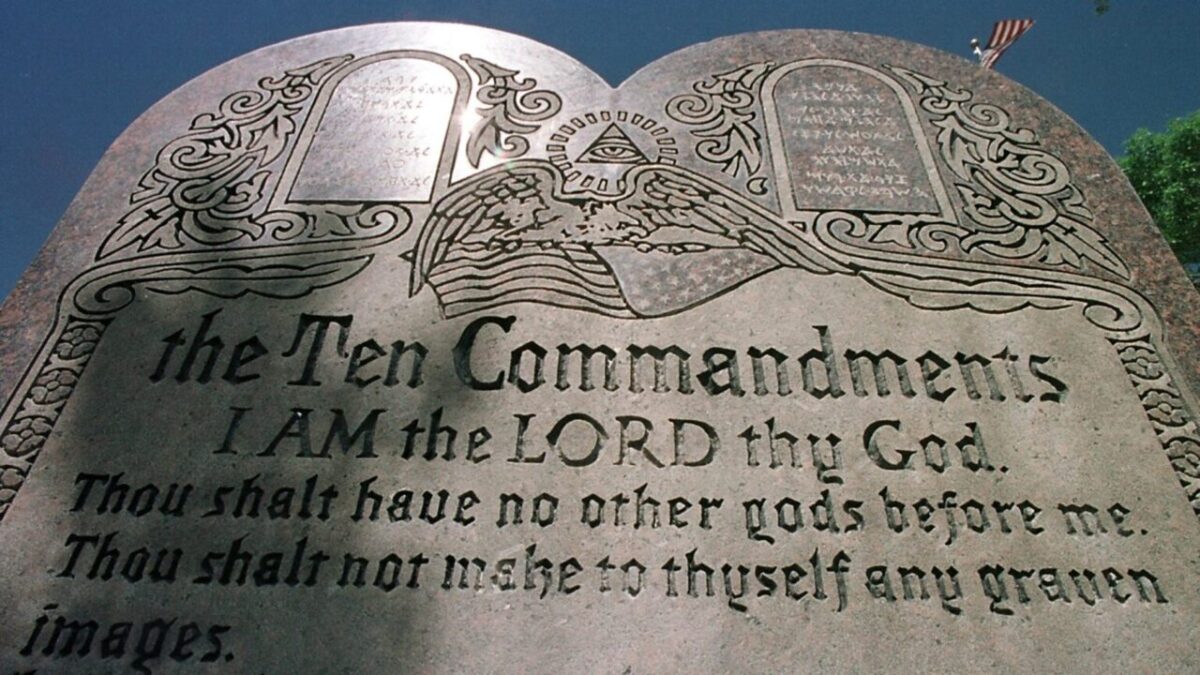

Texas Scores A Big Court Victory
The 5th U.S. Circuit Court of Appeals has ruled that Texas may require public schools to display the Ten Commandments in classrooms. The 9-8 decision lifts a lower court injunction that had blocked the law and gives state leaders a major win in a fight over religion, history, and the role of public schools. Supporters say the ruling simply recognizes a basic fact the modern left hates to admit: the Ten Commandments are woven into the legal and moral traditions that shaped America. Apparently, even a framed list of ancient rules can still send the activist class into a full sprint.
What The Judges Actually Said
In the majority opinion, Judge Stuart Kyle Duncan rejected the idea that merely showing students the Ten Commandments amounts to unconstitutional indoctrination. He wrote that Texas law does not force teachers to preach, require students to recite the commandments, or make children accept them as religious truth. The court said the law does not authorize religious instruction and does not pressure students into worship. In other words, the state is not running a Sunday service with math homework tucked inside. The ruling matters because it pushes back against the claim that anything with a religious reference must be scrubbed from public life, no matter how historic or educational it may be.
The Dissent And The Pushback
Judge Stephen A. Higginson led the dissent, joined by four other judges, arguing that the law crosses a constitutional line and ignores long-standing Supreme Court precedent. The American Civil Liberties Union also blasted the ruling, saying it violates First Amendment principles and family rights over religious instruction. That is the familiar argument from the activist crowd: if the public sees a religious text, the sky must be falling. Texas Sen. Phil King, who wrote the law, called the ruling a great day for Texas and said the Ten Commandments have had a major influence on Western civilization, American history, and law. On that point, even many Americans who are not especially churchgoing would have a hard time pretending the commandments came from nowhere.
Why Supporters Say It Matters
King and other supporters argue that the Ten Commandments helped shape basic ideas in American law, including the value of life, property, honesty, family, and justice. They point to the Declaration of Independence, which refers to God four times, and to legal thinkers like Blackstone, who tied human law to higher moral law. Supporters also say commandments against murder, theft, false witness, and envy still speak to real problems in society today. The larger fight is about whether public schools can acknowledge the religious and moral roots of American civilization without being treated like they just launched a revival meeting in homeroom. Texas says yes, and for now the 5th Circuit agrees.
A federal court has upheld a Texas law requiring public schools to display the Ten Commandments. The court ruled that the requirement does not violate the rights of parents or students because “no child is made to recite the Commandments, believe them, or affirm their divine… pic.twitter.com/w9rn4nVyS8
— CBN News (@CBNNews) April 22, 2026
BREAKING NEWS: Today, the U.S. Fifth Court of Appeals rightly upheld SB 10, which I was honored to author in the Texas Senate, affirming our right to display the Ten Commandments in Texas classrooms. This is a great day for Texas! https://t.co/iyauaSuDAQ
— Phil King (@PhilKingTX) April 21, 2026
WE’D LOVE TO HEAR YOUR THOUGHTS! PLEASE COMMENT BELOW.
JIMMY
Find more articles like this at steadfastandloyal.com.
Leave a Comment