
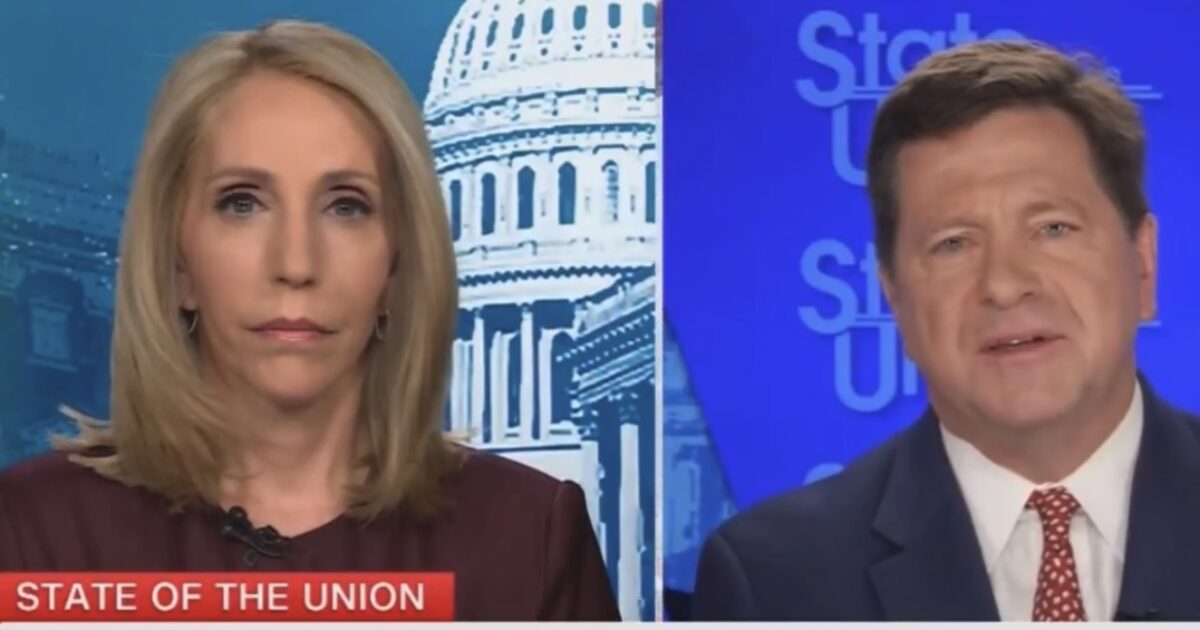

Trump’s description of Putin as a friend became the centerpiece of a Sunday media confrontation after CNN’s Dana Bash and ABC’s Jonathan Karl asked DNI Jay Clayton whether the Russian president should be considered a friend of the United States. Clayton refused to let one word overshadow a summit involving Trump, Putin, and Chinese President Xi Jinping. He pointed instead to what the White House described as the three leaders’ agreement that nuclear war cannot be won and must never be fought. That answer moved the focus to communication among nuclear powers. The answer shifted the discussion away from a yes-or-no label and toward the summit’s stated purpose.
The dispute began at the APEC Summit in Shenzhen, China, last week, where Trump held a trilateral meeting with Putin and Xi for the first time. Before a separate meeting, Trump joked, “Who is he?” then called Putin a “friend” and shook his hand. He later posted a photograph of the two men on Truth Social with the caption “My Friend.” That wording triggered criticism from Democrats and media figures, including Senate Minority Leader Chuck Schumer. Schumer called the moment “Embarrassing, despicable, and quite frankly pathetic,” then said, “Senate Democrats will always stand with Ukraine and against Putin and autocratic dictators around the world.”
Trump’s description of Putin becomes a summit test
On CNN’s State of the Union, Bash pressed Clayton about Trump’s photo and asked whether Putin is a friend of the United States. Clayton answered by calling the president “the greatest conductor of foreign policy in a very challenging time that we have seen.” He said bringing the three nuclear powers together, preventing escalation, and keeping communication open was historic. Clayton added, “That is remarkable, and in that context, whatever language the president wants to use, I trust him completely.” His response treated the summit’s practical purpose as more important than settling a personal label.
Bash asked again whether Putin is a friend of the United States, but Clayton still declined to reduce the exchange to a yes-or-no verdict. “Dana, in different contexts, you can use a different word,” he said. He returned to the meeting itself, calling the president’s success in bringing the three leaders together “just remarkable.” That distinction is central to Clayton’s argument: diplomatic contact is not the same as personal approval, and a friendly term does not erase the risks surrounding Russia. The interview became less about what Trump believes privately and more about whether engagement can lower danger between countries described as nuclear powers.
CNN and ABC tried the same question
Later Sunday, ABC’s This Week brought the same issue back through Jonathan Karl. Karl asked, “Is Vladimir Putin America’s friend?” Clayton again highlighted three world nuclear powers meeting and committing to avoid a nuclear incident. He said it should be reassuring to see the leaders agree they were not going in that direction. He also said, “In that circle of that conversation, using the term friend is entirely appropriate.” Karl continued pressing, keeping the interview centered on Trump’s word instead of Clayton’s broader diplomatic argument.
The repetition made the media approach clear without requiring speculation about the interviewers’ motives. Bash and Karl asked variations of the same question, while Clayton answered with the summit’s stated purpose. That does not prove Trump’s critics are wrong to object to the word friend, but it does show the disagreement is about priorities. Critics hear warmth toward Putin and worry that the language is too generous. Clayton hears a chance to emphasize direct communication among powerful states, especially when the White House says the three presidents reaffirmed that “a nuclear war cannot be won and must never be fought.”
Trump’s argument is relationship, not endorsement
Trump had already laid out his reasoning at the White House on Friday, after CNN’s Kaitlan Collins questioned him about calling Putin a friend and whether Putin was a friend to America. Trump said he could not speak for America, but described his own relationship with Putin as very good. He pointed to Putin’s nuclear capability, the Russia-Ukraine war, and people being killed on both sides. Trump argued that strong relationships with Putin and Xi make the country safer. His stated case was about strength and communication, not a declaration that every Russian action is acceptable.
That argument collided with the Democratic response. Schumer said the moment was “Embarrassing, despicable, and quite frankly pathetic,” and declared that Senate Democrats would stand with Ukraine and against Putin and autocratic dictators around the world. His statement treats the public use of “friend” as a political and moral signal, not merely a conversational choice. That is why the phrase became bigger than the handshake or photograph. One side sees engagement as a tool for reducing danger, while the other sees familiarity with Putin as a concession.
Watch Trump’s White House exchange.
A word fight over a nuclear-power summit
What is confirmed in the exchange is narrower than the political reaction suggests. Trump met Putin and Xi at the APEC Summit, posted the photograph, and called Putin a friend. Clayton defended that language on both CNN and ABC while pointing to the leaders’ stated commitment against nuclear escalation. Democrats and the interviewers challenged the warmth of the language, but the account does not establish that Clayton or Trump announced a new agreement with Russia. It also does not answer whether the summit will produce lasting results beyond the public commitment described by the White House.
That leaves Clayton’s answer as a test of what viewers want from foreign-policy interviews. If the goal was to force him to disown Trump’s word choice, he did not do it. Instead, he kept returning to one practical point: direct contact among the United States, Russia, and China matters when the alternative is greater tension. That does not settle the argument over Putin, Ukraine, or Trump’s tone. It does explain why the questions did not produce the yes-or-no answer CNN and ABC kept seeking.
WE’D LOVE TO HEAR YOUR THOUGHTS! PLEASE COMMENT BELOW.
Find more articles like this at redrightupdates.com.
Leave a Comment