
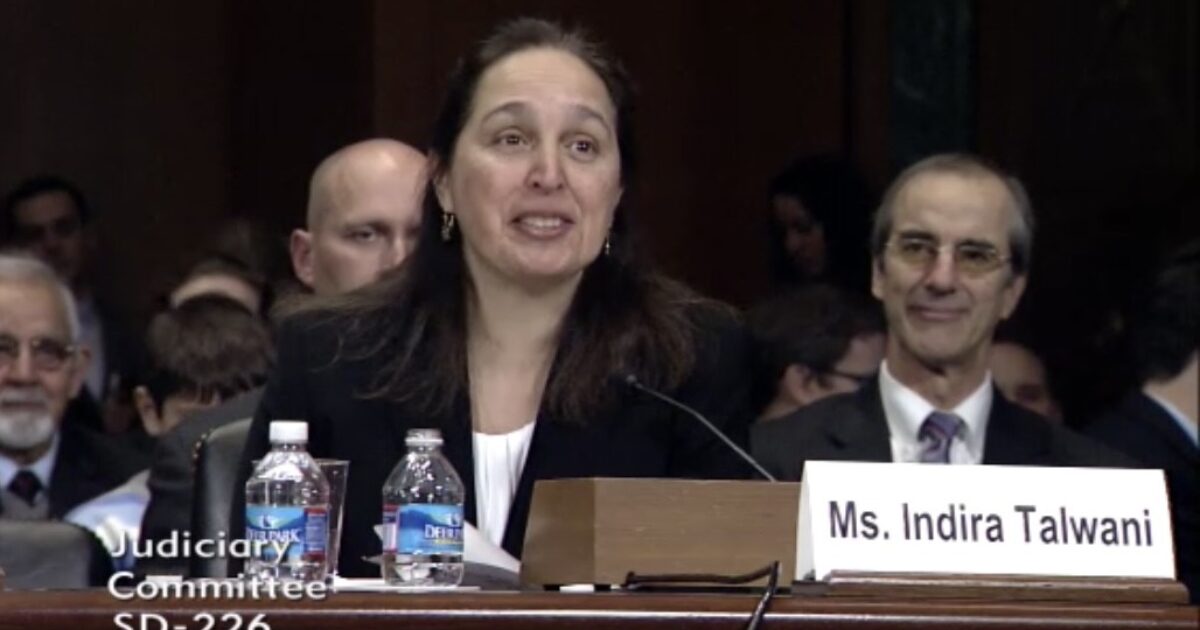

Boston Judge Says USPS Crossed Her Line
Obama-appointed U.S. District Judge Indira Talwani escalated the fight over President Donald Trump’s election-integrity order on Tuesday, ruling that the U.S. Postal Service violated her nationwide injunction by completing new rules for federal mail-in ballots. Talwani accused the government of “complete noncompliance” and said USPS ignored her earlier order blocking action tied to Section 3 of Executive Order No. 14399. The timing is what makes this one especially rich, since the Supreme Court had just stayed a related injunction in another case, giving the Trump administration room to move forward for now. Washington never misses a chance to turn mail into a constitutional cage match.
The Injunction Targeted Rulemaking Itself
Talwani’s injunction came in League of Women Voters of Massachusetts v. Trump and barred the USPS defendants from “implementing, giving effect to, or enforcing” Section 3 of the executive order for the November 3, 2026 election or any earlier election. It also blocked them from “initiating or completing rulemaking” to create the specific regulations outlined in parts of that section. That is the key point in her ruling: the judge did not just object to enforcement, she said the Postal Service was not allowed to finish the rulemaking process at all while her injunction remained in place.
USPS Finalized The Rule Anyway, With A Caveat
On Friday evening, August 21, USPS completed the rulemaking process and sent a Final Rule titled “Ballot Mail for Federal Elections” to the Office of the Federal Register. The rule carried an immediate effective date of August 21 and was set for publication on August 26. The Postal Service included language acknowledging the court injunctions and stated that it “will not take actions to implement the rule specifically for the 2026 election unless and until the government obtains relief from those injunctions.” To regular folks, that may sound like saying, “We finished the paperwork, but we are not using it yet.” Talwani was not buying that distinction.
Talwani Says The Government Feigned Compliance
In her order, Talwani said the defendants violated her “explicit directive” not to initiate or complete rulemaking. She also accused the administration of having “feigned complete compliance” with a related injunction in California v. Trump when seeking emergency relief from the Supreme Court. Her ruling stated, “Accordingly, despite the Defendants’ protestations that ‘[t]he United States takes its obligation to comply with court orders very seriously,’ the court finds that Defendants violated the preliminary injunction in this case.” Yet after making that finding, she imposed no new remedy, did not strike the Final Rule, and agreed that the plaintiffs’ requested relief “does not change the current landscape.” That is quite a lot of judicial thunder for no new lightning bolt.
The Supreme Court Had Just Stepped In
The ruling came one day after the U.S. Supreme Court granted a stay of Talwani’s other injunction in the related Trump v. California case, No. 26A124. The Court determined that the Trump administration was likely to prevail on its argument that the coalition of Democrat-led states lacked standing and that their claims were not ripe for judicial review. The majority also found that the lower court’s injunction was causing irreparable harm to the federal government by preventing USPS from even initiating the rulemaking requested by the president. Justices Sonia Sotomayor, Elena Kagan, and Ketanji Brown Jackson dissented.
What The Mail-Ballot Rules Require
The final USPS regulations require federal ballot-mail envelopes to carry official Election Mail markings, meet automation standards, and include unique Intelligent Mail barcodes. State election officials would submit voter information through a Federal Ballot Mail Portal, including the name of the person receiving the ballot, the voter’s address, a unique barcode for the outbound ballot envelope, a unique barcode for the return envelope, and the state of the originating election office. Under the rule, outgoing federal ballot mail that fails to meet the standards could be rejected and returned to the authorized election official. In other words, the rules aim to track and standardize ballot mail, which somehow becomes controversial the moment election security enters the room.
The Online Receipt
🚨 Judge Indira Talwani ruled that the USPS violated her nationwide injunction against President Trump’s election executive order by finalizing mail-ballot rules while the order was blocked, accusing the government of having “feigned complete compliance.” pic.twitter.com/m0VcozdCkM
— SCOTUS Wire (@scotus_wire) August 25, 2026
WE’D LOVE TO HEAR YOUR THOUGHTS! PLEASE COMMENT BELOW.
JIMMY
Find more articles like this at steadfastandloyal.com.
Leave a Comment