

Prayer in Washington Is Nothing New
The latest fight over prayer in federal offices has stirred up the usual crowd of legal alarmists, who act like a Bible at the Pentagon is the same as a state church in old Europe. It is not. The First Amendment bars Congress from creating an official religion or forcing worship, but it does not erase the nation’s long habit of public prayer. From the start, American leaders asked God for help, wisdom, and mercy. That was not some fringe experiment. It was part of the way the republic understood itself. Funny how the same people who call history “settled” seem shocked when the actual history shows up at the door.
What ‘Separation’ Really Meant
The phrase “separation of church and state” gets tossed around like it came down from Mount Sinai, but it did not appear in the Declaration, the Constitution, or the Federalist Papers. It came from Thomas Jefferson’s private 1802 letter to the Danbury Baptists. Even there, Jefferson was reassuring a minority faith that the federal government would not meddle in its worship. The original concern was a national church like the Church of England, where the state controlled religion and taxed the people to support it. That is a far cry from a chaplain opening a meeting or a secretary hosting a prayer service. Words matter, and so does the meaning behind them, even when activists would prefer a softer story that fits their lawsuit.
Trump Officials Push Prayer Back In
Since early 2025, the Trump administration has openly encouraged prayer in federal spaces, including at the Pentagon and the Department of Labor. Defense Secretary Pete Hegseth launched the first “Secretary’s Christian Prayer and Worship Service” at the Pentagon in May 2025, during work hours and with employees invited. By March 2026, he was still leading monthly services, while Labor Secretary Lori Chavez-DeRemer spoke about her Catholic faith at the department’s inaugural gathering on December 10. Critics call this dangerous, but no one is being forced to attend, no denomination has been crowned king, and taxpayers are not funding a state church. In other words, the constitutional apocalypse keeps failing to arrive.
The Lawsuits Keep Coming
The legal pushback has been led by Americans United for Separation of Church and State, which filed suits in March 2026 in federal court in Washington, D.C. Those cases were procedural and tied to FOIA requests, not a direct constitutional attack on the prayer services themselves. The group has also sued over earlier Trump administration actions involving anti-Christian bias, the Religious Liberty Commission, and its report. Democracy Forward joined the fight against the commission, too. This is how the modern left operates: if they cannot stop a policy head-on, they throw paperwork at it until the printer gives up. It may be tedious, but it is not exactly a principled defense of liberty.
America Has Always Prayed Publicly
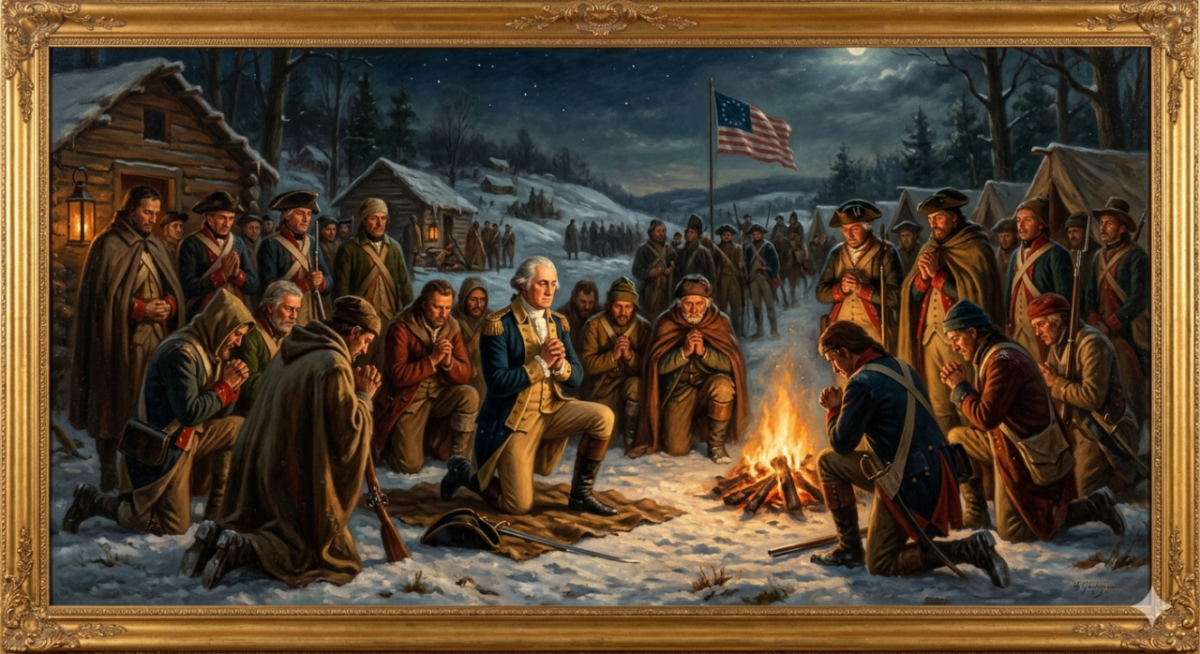
The historical record is hard to ignore. The Continental Congress called the colonies to prayer in 1775, before the Constitution even existed. It also created the military chaplain corps that same year at George Washington’s request. When the Senate first met in 1789, one of its first steps was choosing a chaplain, and the House did the same shortly after. The Supreme Court has long opened with, “God save the United States and this honorable Court.” Presidents have issued 151 national calls to prayer, humiliation, fasting, and thanksgiving from 1789 through 2022, and 35 of the 46 presidents signed prayer proclamations. That is not a side note. That is the American tradition.
The Founders Were Not Secular Robots
Even the founders most often cited by church-state activists did not live like modern secularists. James Madison issued proclamations for fasting and thanksgiving, and Jefferson signed treaties that sent religious ministers to Native Americans. George Washington closed his 1783 letter to state governors with a full prayer asking God to guide the nation. He did not talk like a man embarrassed by religion. He sounded like a man who knew a republic needs virtue to survive. The Supreme Court agreed in Zorach v. Clauson in 1952, saying the Constitution does not require government to show “callous indifference” to religion. That is a detail the modern anti-faith crowd would love to file away under “inconvenient.”
Faith Still Has a Place in Public Life
For conservatives, the real issue is simple. America was never built on the idea that faith must be locked out of public life. It was built on freedom of conscience, not government hostility to religion. Prayer in government does not become tyranny just because activists say “separation” three times like it is a magic spell. The Constitution protects the church from being swallowed by the state, and it protects citizens from being forced into belief. It does not demand that public servants act as if God is some banned subject. The founders prayed, the early Congress prayed, and presidents have kept praying ever since. That is not a violation of the American story. It is part of it.
WE’D LOVE TO HEAR YOUR THOUGHTS! PLEASE COMMENT BELOW.
JIMMY
Find more articles like this at steadfastandloyal.com.
Since our founding to date