
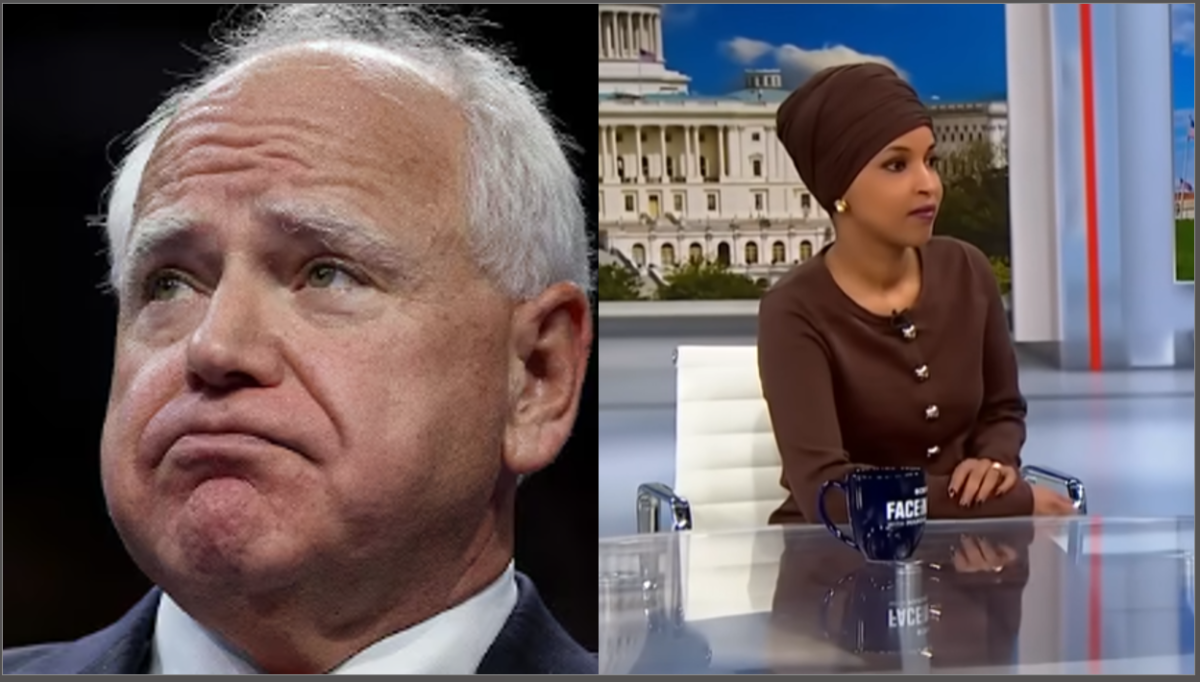

The Minnesota fraud scandal has grown so enormous, so chaotic, and so politically radioactive that calling it a “COVID-era mistake” might be the single most dishonest description anyone could offer. This wasn’t confusion. This wasn’t a glitch. This was a statewide collapse of oversight that allowed a billion dollars—possibly far more—to disappear while Gov. Tim Walz and his administration either looked away, froze in fear, or convinced themselves that confronting obvious fraud would be politically incorrect. What began as a simple welfare-meal reimbursement program has become the largest pandemic fraud case in the United States, with federal prosecutors uncovering shell companies, phantom meal sites, and fraudulent autism services that ballooned into hundreds of millions of dollars. Just when Minnesotans thought the situation couldn’t get worse, the Treasury Department revealed it is tracking overseas wire transfers tied to the fraud, including transfers to Somalia and the Middle East—regions where al-Shabaab, a designated terrorist organization, operates. This isn’t rumor. This is the federal government confirming they’re investigating where the stolen money went. Add to that an ongoing House Oversight investigation into Walz’s response, new scrutiny of Attorney General Keith Ellison, and Rep. Ilhan Omar’s increasingly defensive interviews, and you have a political disaster that keeps expanding outward. Nobody is accusing Omar of running the fraud, but her dismissive tone, shifting explanations, and finger-pointing at the FBI haven’t helped. Meanwhile, Minnesota’s agencies look like they were asleep at the wheel—or terrified of appearing discriminatory—while criminals ransacked the system in broad daylight. This isn’t a Minnesota problem anymore. It’s a national one.
How the Fraud Grew Into a Billion-Dollar Monster
Federal investigators are still stunned by the numbers. The Feeding Our Future scandal alone involved nearly $300 million in fraudulent reimbursements for meals that never existed. Prosecutors say some defendants claimed to feed 91 million meals—numbers that were mathematically impossible based on location size, staffing, and physical capacity. One site reported feeding 6,000 children a day in a town with a population of 2,500. Other operators billed for autism therapy sessions that never occurred, inflating the autism program from $3 million in 2018 to nearly $400 million by 2023. Housing Stabilization Services, budgeted at $2.6 million per year, exploded to more than $100 million. Whistleblowers said they alerted state leaders. State auditors saw the warning signs. Even federal staff flagged issues before COVID hit. But Walz’s agencies ignored, reassigned, or sidelined anyone who tried to expose what was happening. Nonprofits accused of fraud responded with claims of racism, and Minnesota officials backed down instead of pushing forward. When the Department of Education tried to halt payments to Feeding Our Future, the nonprofit sued, claiming discrimination, and a judge ordered the state to resume funding—something federal prosecutors later said allowed the fraud to grow exponentially. You couldn’t design a system more vulnerable to abuse if you tried.
Ilhan Omar Becomes the Face of Deflection
Rep. Ilhan Omar stepped into the media spotlight and delivered what might be one of the most evasive interviews of the year. On Face the Nation, she insisted she had no knowledge of wrongdoing, no involvement with the individuals charged, and no understanding of why Treasury Secretary Scott Bessent said people implicated in the fraud had also donated to her campaign. Omar said she refunded the donations long ago, though she didn’t explain why multiple fraudsters felt comfortable supporting her politically in the first place. When Brennan pressed her on the possibility of overseas transfers reaching al-Shabaab, Omar pivoted to blaming the FBI and the U.S. court system, saying that if any fraud-linked money touched terrorism networks, “that is a failure of the FBI.” That’s quite a statement. Omar didn’t create the fraud, but her reactions have become the political fog surrounding the scandal—an attempt to minimize the scale, cast doubt on inconvenient facts, and emphasize that the Somali community is also a victim. While it’s true that most Somali-Americans had nothing to do with the fraud, the reality remains that prosecutors say nearly all charged individuals are of Somali descent, operating in Omar’s district, during her tenure, while some donated to her. Optics matter, and these optics are devastating.
Federal Government Steps In After Minnesota Loses Control of Its Own Programs
Nothing underscores the severity of the Minnesota fraud scandal more than the federal government stepping in and effectively telling the state: You cannot be trusted with your own money anymore. Centers for Medicare and Medicaid Services (CMS) Administrator Dr. Mehmet Oz—yes, that Dr. Oz—sent a formal letter to Gov. Walz declaring that Minnesota’s Medicaid programs were suffering from “systemic fraud” and that the federal government was done footing the bill for Minnesota’s incompetence. Oz cited Housing Stabilization Services as a prime example: projected to cost $2.6 million annually, it paid out more than $100 million in 2024 alone. CMS had already intervened in October, helping Minnesota shut the program down entirely because the fraud risk was so high. Now CMS is imposing sweeping corrective actions. Minnesota must provide weekly updates on fraud mitigation, freeze provider enrollment in more than a dozen high-risk programs, verify every existing provider as legitimate, remove fraudulent operators, and submit a comprehensive corrective action plan within 60 days—or face funding consequences. The Trump administration is not bluffing. CMS made it clear that federal funds may be withheld, stating bluntly: “We are done footing the bill for your incompetence.” Walz’s office responded with a deflection so predictable it bordered on parody, claiming: “While the Governor has been working to ensure fraudsters go to prison, the President is letting them out.” That’s rich, considering the fraud exploded under Walz’s leadership, after multiple warnings, and resulted in programs ballooning into financial monsters overnight. Walz only paused payments to 14 major state programs after the scandal became impossible to ignore and after CMS stepped in. You don’t get credit for slamming the brakes after the car has already gone through the guardrail. The federal message was unmistakable: Minnesota cannot continue operating its social-services programs without adult supervision.
Why the Terrorism Angle Matters, Even If unproven
The Treasury Department made headlines when it confirmed that investigators are tracing fraud-linked money that moved overseas through informal hawala networks. The question is whether any of that money reached al-Shabaab. While no formal conclusion has been reached, Minnesota’s history with radicalization and overseas recruitment makes this a national-security concern. In the late 2000s, around 20 Somali-Americans left Minnesota to join al-Shabaab. One became the first ever American suicide bomber. Federal officials say the threat still exists today. Omar’s instinct to shift blame to the FBI rather than the criminals or the oversight failures does not inspire confidence. Whether or not terrorism is involved, the fact that investigators have to check is itself evidence of catastrophic oversight.
Crime, Assimilation, and the Taboo No One Wants to Touch
Minnesota’s Somali community may not be defined by the criminals within it, but the concentration of fraud cases and recent violent crimes—including kidnappings, sexual assaults, and gang-related shootings—has shaken public confidence. Community leaders argue that crime is an individual act, not a cultural indictment, and they are right. But political leaders have repeatedly refused to confront even the patterns, preferring to hide behind accusations of racism rather than address the root causes. This dynamic—fear of speaking hard truths—allowed fraud to expand unchecked. It also deepened the gap between political elites and everyday Minnesotans who see what their leaders refuse to acknowledge.
The Real Victims in the Minnesota Fraud Scandal
It’s important to remember who was harmed. The fraud didn’t hurt the government—it hurt the vulnerable families the programs were designed to support. It hurt children who needed meals. It hurt autistic kids who needed therapy. It hurt the Somali-American community itself, which trusted that the programs meant to help them would be safeguarded. Fraud of this scale steals not just money but opportunity, stability, and trust. And the bitter truth is that Minnesota’s leadership let it happen.
Why Walz and Omar Cannot Escape the Political Consequences
Neither Walz nor Omar orchestrated the fraud. But both were responsible for recognizing the warning signs and responding decisively. Walz controlled the agencies that failed. Omar represented the community most affected, received donations from individuals later charged, and offered political narratives that softened criticism rather than sharpened scrutiny. Leadership is not about avoiding blame. It’s about stepping into the fire when things go wrong. Walz and Omar stepped back instead. And the Minnesota fraud scandal burned everything behind them.
WE’D LOVE TO HEAR YOUR THOUGHTS! PLEASE COMMENT BELOW.
JIMMY
Find more articles like this at steadfastandloyal.com.
h/t: Steadfast and Loyal
Why would you leave out Obama from this fraud story. Was it not him who dumped all these Somalis into Minnesota. Next I find it really uneasy why Keith Ellison would step down as a Congressman and then become Attorney General. Is it not true that his own Religion is Muslim. Funny how that looks. All planed as part of Obamas Hope & Change Game for our America. Who is looking into this for We The People? Just asking.
Immigrants some abuse & game the system for others
Obummer has to be in this fraud
Besides make MN a Sharia State all Muslim soon