
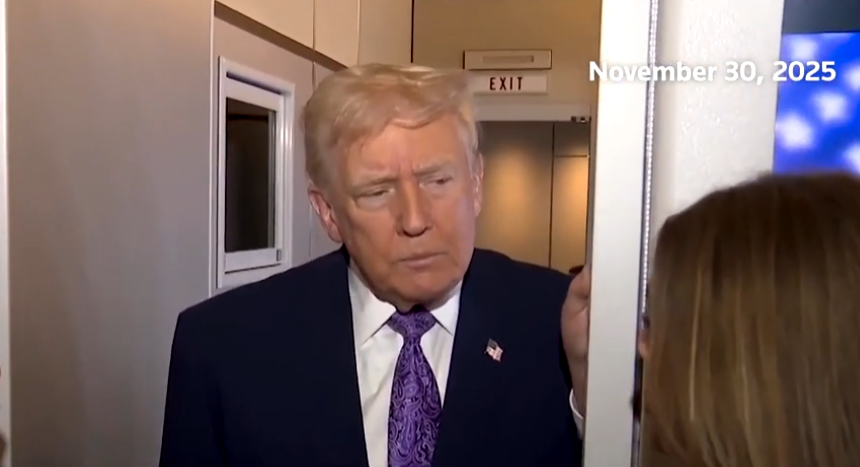

The Ultimatum Heard Around the Hemisphere
The Trump Venezuela ultimatum marks a historic shift in U.S. foreign policy, not because it came with the usual diplomatic wording, but precisely because it did not. Donald Trump delivered an unambiguous message: Nicolás Maduro could leave Venezuela peacefully with guaranteed evacuation for his family — or face the consequences of staying. When Maduro demanded global amnesty for his crimes and the right to keep control of the armed forces, Trump rejected it outright. What followed was a bold escalation the world couldn’t ignore: the United States announcing that Venezuelan airspace should be considered “closed in its entirety,” signaling that Washington is prepared to move from pressure to action.
Why Maduro’s Reaction Reveals More Than He Intended
After Trump issued the warning, Caracas erupted with outrage, calling the announcement a “colonialist threat” and “illegal aggression.” Venezuela insists the United States has no authority to close another nation’s airspace — and legally, that is true. But Maduro’s furious reaction reveals the real problem: the regime is terrified. And it should be. The Trump Venezuela ultimatum struck at the heart of a narco-dictatorship that has survived for years by weaponizing victimhood. Maduro hides behind anti-imperial slogans while his government collapses under corruption, drug trafficking, starvation-level poverty, and the mass exodus of more than eight million Venezuelans. His loudest objections only prove how vulnerable he now is.
The Airspace Warning Wasn’t About Symbolism — It Was a Strategic Signal
For all the noise coming from Caracas, the real significance of Trump’s airspace declaration is what it implies militarily. Expert analysts have already pointed out that such warnings often precede missile strikes or broader military operations. The United States also issued a NOTAM — a Notice to Airmen — around Venezuelan airspace the previous week, further highlighting that plans have been in motion long before Trump mentioned them publicly. Washington has spent years mapping regime targets, identifying cartel-linked infrastructure, and tracking the movements of Maduro’s inner circle. The bottom line: if Trump were preparing to dismantle the command-and-control network propping up the regime, this is exactly what the early stage would look like.
A Narco-State on America’s Border Is No Longer Tolerable
To understand the urgency of the Trump Venezuela ultimatum, we have to acknowledge what Venezuela has become. This is not a standard dictatorship; it is a state-run criminal enterprise. The Cartel de los Soles — now officially designated a foreign terrorist organization — operates from inside the Venezuelan military and uses government aircraft to move cocaine from Colombia across the hemisphere. Intelligence reports link the cartel to Hezbollah, Iran’s Quds Force, and an international network of traffickers. This isn’t speculation; even European governments are now acknowledging the danger. Venezuela isn’t merely exporting drugs — it is exporting instability, strengthening America’s adversaries, and fueling the migration crisis that has overwhelmed U.S. cities. Trump’s ultimatum wasn’t just directed at a dictator — it was aimed at an entire criminal apparatus.
Why Trump’s Approach Succeeds Where Diplomacy Failed
During his first term, Trump openly supported Venezuela’s democratic opposition and pushed sanctions to weaken the regime. But global diplomacy failed to move Maduro, largely because powerful allies — Cuba, Russia, Iran, and at times China — shielded him. Now, the geopolitical landscape has shifted. Russia and Iran are stretched thin by their own conflicts and sanctions. China sees little strategic reason to invest further in a collapsing Venezuelan economy. For the first time in decades, Maduro is isolated. This is why Trump’s return to action appears far more effective. His willingness to escalate quickly, combined with the regime’s weakened support network, creates conditions that traditional diplomacy simply never could.
The Cuban Factor: Why Maduro Is Afraid to Flee
Congresswoman María Elvira Salazar offered a critical insight into why Maduro rejected Trump’s offer to leave. According to her, Maduro’s greatest fear isn’t the United States — it’s Cuba. Havana controls Venezuela’s internal security and intelligence agencies, using tactics borrowed directly from the Castro playbook: surveillance, torture, infiltration, and propaganda. Maduro knows that if he flees, he could be killed before he reaches an airport. The Cubans need him as a figurehead, and the cartels need him as cover. This explains why he clings to power even as the world closes in. The Trump Venezuela ultimatum puts him in a corner he has spent years avoiding.
The Opposition Leader Hunted in Her Own Country
While Maduro postures as a revolutionary, the real hero of Venezuela is María Corina Machado — the woman Salazar calls the “George Washington of modern Venezuela.” Machado won 90% in the opposition primary but was barred from running by the regime. When she backed Edmundo González as the replacement candidate, he won the election — which the regime then declared invalid. González fled into exile under threat, while Machado stayed inside Venezuela, hiding in tunnels as regime forces attempt to track her down. Her courage is why Trump’s actions resonate. The opposition is not a fractured movement. It is unified, legitimate, and supported by an overwhelming majority of Venezuelans.
Why the Situation Now Feels Imminent
Salazar and multiple analysts believe that Maduro’s fall is not a question of “if” but “when.” The country is fractured, the military is weakened, and the regime’s foreign backers are distracted. The American military buildup — including the deployment of the USS Gerald Ford — underscores how serious this moment is. Trump’s airspace announcement was the clearest sign yet that Washington may be preparing to apply maximal pressure. Add in intelligence suggesting that Venezuelan soldiers are defecting and the population is overwhelmingly pro-opposition, and the timeline looks short. Salazar even suggests the end could come “before Christmas.”
The Stakes for the Hemisphere Are Enormous
Venezuela holds the largest proven oil reserves in the world. Under democratic leadership, it could rebuild quickly. Salazar argues that once Maduro falls, American companies could help restore the oil sector and revitalize a country devastated by socialism and corruption. A stable Venezuela would benefit the entire hemisphere — reducing migration, weakening drug networks, and blocking Iran, Russia, and China from gaining influence in Latin America. The Trump Venezuela ultimatum isn’t just about regime change. It’s about reshaping regional stability for decades.
Why This Moment Matters for Americans
Some Americans may wonder: why should we care? The answer is simple. Venezuela is not an isolated problem. It is a hub for criminal networks that traffic drugs into America’s cities, launder billions through shadow financial systems, and destabilize democratic neighbors. It fuels migration, empowers hostile foreign governments, and exports radicalization through its partnership with Hezbollah-linked groups. Ignoring Venezuela has been a luxury the United States can no longer afford. The ultimatum isn’t a stunt — it’s a necessary response to a threat on our doorstep.
The Path Forward After the Ultimatum
What happens next will determine the future of Venezuela and the stability of the Western Hemisphere. If Maduro refuses to negotiate, pressure will escalate. If he attempts to flee, internal factions may stop him. If the opposition rises, the military may break. What is clear is that the days of Maduro’s uncontrolled rule are ending. Trump’s ultimatum marks the first moment in years when the regime feels true fear. And for the Venezuelan people, who have suffered hunger, torture, censorship, and collapse — this moment represents hope.
Final Thoughts
The Trump Venezuela ultimatum is not simply an aggressive tweet or a bold statement. It is the culmination of geopolitical shifts, intelligence operations, humanitarian crises, and the determination of a population ready to reclaim its country. Whether Maduro flees or digs in, history is moving — and the United States is driving that movement. In a hemisphere long destabilized by socialism, foreign interference, and narco-power, Trump’s decisive strategy may be the moment that finally breaks the cycle.
WE’D LOVE TO HEAR YOUR THOUGHTS! PLEASE COMMENT BELOW.
JIMMY
Find more articles like this at steadfastandloyal.com.
h/t: Steadfast and Loyal
Leave a Comment